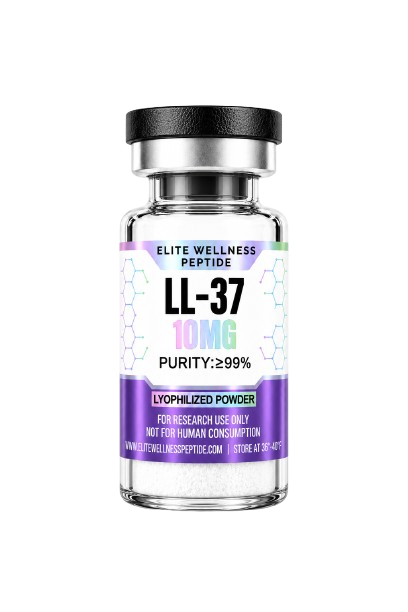
LL-37 10MG
$99.00
⚠ For laboratory research use only. Not for human consumption.
CAS NO: 154947-66-7
Molecular Formula: C205H340N60O53
Molecular Weight: 4493.32 g/mol
Form: Lyophilized powder
Appearance: white powder
Storage: 2-8°
Purity: ≥99
In Stock
Description
⚠ For laboratory research use only. Not for human consumption.
CAS NO: 154947-66-7
Molecular Formula: C205H340N60O53
Molecular Weight: 4493.32 g/mol
Form: Lyophilized powder
Appearance: white powder
Storage: 2-8°
Purity: ≥99
LL-37 – A MULTI-FUNCTIONAL HOST DEFENSE PEPTIDE FOR IMMUNOMODULATORY AND WOUND HEALING RESEARCH
This high-purity human cathelicidin peptide (LL-37) is a multifunctional host defense compound for immunology and cell biology research. It is designed for in-vitro studies of innate immunity, wound healing, and microbial defense mechanisms.
LL-37 – THE BODY’S NATURAL DEFENDER
LL-37 is investigating innate immunity, inflammation, and tissue repair. LL-37 is the only cathelicidin-derived antimicrobial peptide (AMP) found in humans, produced by various cell types including neutrophils, epithelial cells, and keratinocytes. Beyond its direct antimicrobial properties, LL-37 exhibits a remarkable range of immunomodulatory and pro-healing activities. This product description serves as a foundational research primer to guide your experimental design in immunology, dermatology, and cell biology.
LL-37 – THE MULTIFACETED MECHANISM OF ACTION OF LL-37
The research value of LL-37 lies in its complex, pleiotropic functions, bridging innate defense and coordinated tissue repair.
- Direct Antimicrobial Activity:As a cationic amphipathic peptide, LL-37 disrupts microbial membranes through electrostatic interactions and pore formation, leading to cell lysis. It exhibits broad-spectrum activity against Gram-negative and Gram-positive bacteria, fungi, and certain viruses. Its mechanism is considered less likely to induce rapid resistance compared to traditional antibiotics, making it a compelling subject for research into novel anti-infective strategies.
- Immunomodulation and Chemotaxis:LL-37 acts as a chemoattractant for immune cells, including neutrophils, monocytes, and T-cells, by interacting with formyl peptide receptor-like 1 (FPRL1) and other receptors. It can modulate the production of both pro-inflammatory and anti-inflammatory cytokines (e.g., IL-1β, IL-6, IL-10), influencing the direction and magnitude of the immune response. This dual role allows it to help initiate a defense response while also contributing to its resolution.
- Wound Healing and Angiogenesis:LL-37 promotes several stages of wound repair. It stimulates the migration and proliferation of keratinocytes, fibroblasts, and endothelial cells. Critically, it induces angiogenesis (the formation of new blood vessels) by promoting endothelial cell proliferation and tube formation, a process essential for delivering oxygen and nutrients to healing tissue.
- Lipopolysaccharide (LPS) Neutralization:LL-37 can bind to and neutralize bacterial endotoxins like LPS, preventing their interaction with Toll-like receptor 4 (TLR4) on immune cells. This mitigates the potentially catastrophic inflammatory cascade of septic shock, a key area of investigation in sepsis research models.
LL-37 – 5MG KEY RESEARCH APPLICATIONS
2.1 Investigating Innate Immunity and Antimicrobial Mechanisms
Research into LL-37’s direct microbial killing provides insights into host defense and alternative therapeutic avenues.
- Relevant Study:*Turner, J., Cho, Y., Dinh, N. N., Waring, A. J., & Lehrer, R. I. (1998). Activities of LL-37, a cathelin-associated antimicrobial peptide of human neutrophils. Antimicrobial Agents and Chemotherapy, 42(9), 2206-2214.*
- PubMed Link:https://pubmed.ncbi.nlm.nih.gov/9736537/
- Focus of Research:This foundational study characterized the in-vitro antimicrobial activities of synthetic LL-37 against a panel of microorganisms.
- Key Findings:The research demonstrated that LL-37 was effective against a wide range of pathogens, including Escherichia coli, Pseudomonas aeruginosa, Staphylococcus aureus, and Candida albicans, establishing its role as a broad-spectrum effector of innate immunity.
- Research Implication:Researchers can use our LL-37 in standard broth microdilution or colony-forming unit (CFU) assays to determine minimum inhibitory concentrations (MICs) against specific bacterial or fungal strains of interest. This allows for the study of its efficacy as a standalone agent or in combination with conventional antibiotics.
2.2 Research on Wound Healing and Tissue Regeneration
LL-37’s role in promoting cellular migration and proliferation is central to tissue repair research.
- Relevant Study:*Shaykhiev, R., Beisswenger, C., Kändler, K., & (2005). Human endogenous antibiotic LL-37 stimulates airway epithelial cell proliferation and wound closure. American Journal of Physiology-Lung Cellular and Molecular Physiology, 289(5), L842-L848.*
- PubMed Link:https://pubmed.ncbi.nlm.nih.gov/16040616/
- Focus of Research:This study examined the effects of LL-37 on the wound healing capacity of human airway epithelial cells in-vitro.
- Key Findings:LL-37 significantly accelerated wound closure in a scratch assay model. It was shown to stimulate epithelial cell proliferation and migration through mechanisms involving transactivation of the epidermal growth factor receptor (EGFR).
- Research Implication:Researchers can use our LL-37 in classic in-vitro wound healing assays (scratch assays) using monolayers of keratinocytes, fibroblasts, or other relevant cell types. Time-lapse microscopy can quantify migration rates. Additionally, proliferation can be measured via BrdU or MTT assays, and angiogenesis can be modeled using tube formation assays with human umbilical vein endothelial cells (HUVECs).
2.3 Exploring Immunomodulation and Inflammatory Pathways
Understanding how LL-37 bridges infection control and inflammation resolution is a key research area.
- Relevant Study:*Scott, M. G., Davidson, D. J., Gold, M. R., Bowdish, D., & Hancock, R. E. (2002). The human antimicrobial peptide LL-37 is a multifunctional modulator of innate immune responses. Journal of Immunology, 169(7), 3883-3891.*
- PubMed Link:https://pubmed.ncbi.nlm.nih.gov/12244186/
- Focus of Research:This comprehensive study investigated the immunomodulatory functions of LL-37 on human peripheral blood mononuclear cells (PBMCs) and monocytes.
- Key Findings:LL-37 induced chemotaxis of neutrophils, monocytes, and T-cells. It modulated LPS-induced cytokine release (e.g., increasing IL-10 while inhibiting TNF-α in certain contexts) and promoted dendritic cell maturation, highlighting its role as a critical regulator of the immune response.
- Research Implication:Researchers can use our LL-37 to treat immune cell cultures (e.g., PBMCs, THP-1 monocytes, dendritic cells). Outcomes can be measured via flow cytometry for cell surface markers, ELISA for cytokine secretion profiles (e.g., IL-1β, IL-6, TNF-α, IL-10), and chemotaxis assays (e.g., using Boyden chambers).
EXPERIMENTAL PREPARATION
For accurate research application:
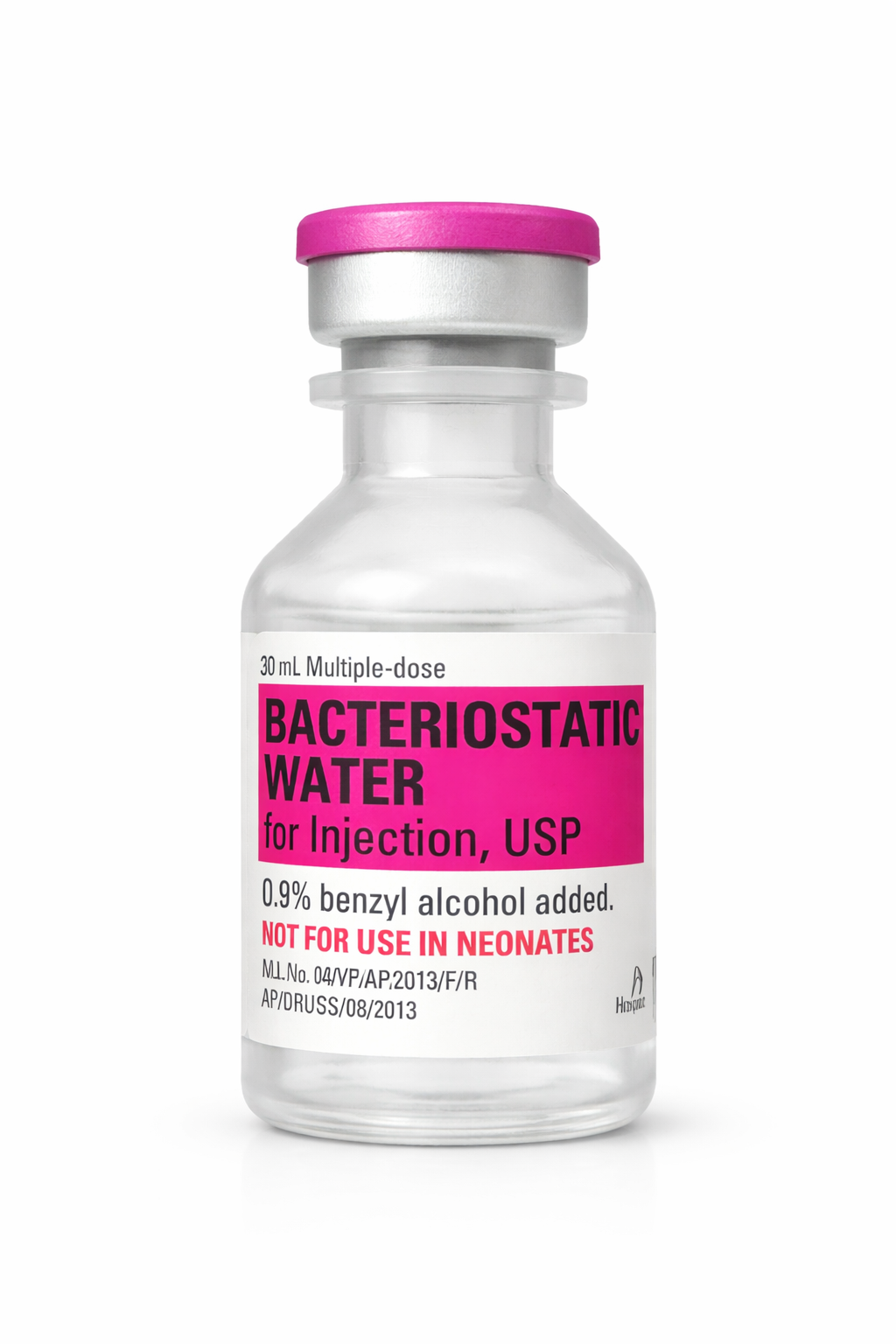
- Reconstitutewith appropriate volume of bacteriostatic water
- Inject BAC water slowly down the inside wall of the vial, rather than directly onto the powder.
- Gently swirluntil fully dissolved (do not vortex)
- Administerimmediately or store at 4°C protected from light
- Reconstituted: Stable 30 days at 4°C
IMPORTANT: This product is intended strictly for laboratory research purposes only. NOT for human or animal consumption. NOT for medical or diagnostic use. These products have not undergone evaluation by the U.S. Food and Drug Administration. By purchasing, you confirm compliance with all applicable regulations.
Reviews
There are no reviews yet.